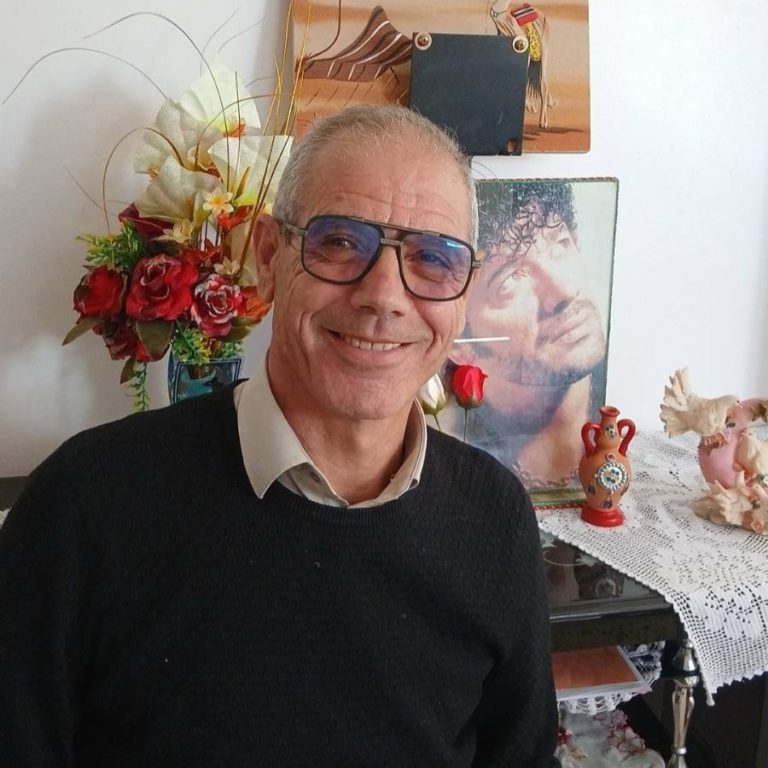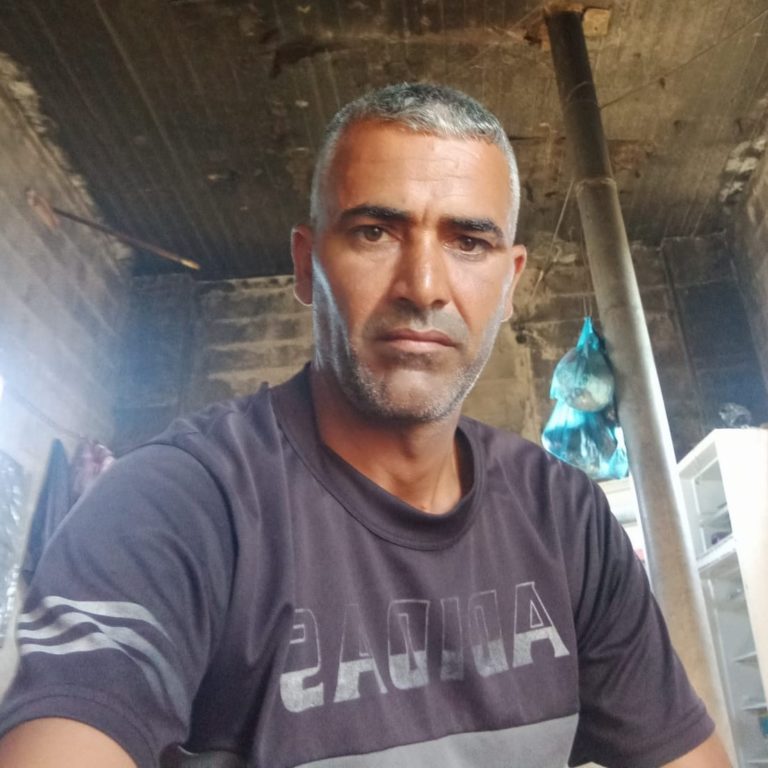
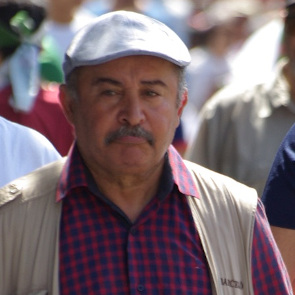
Kaddour Chouicha was vice-president of the Algerian League for the Defense of Human Rights (LADDH), dissolved in 2022, and is the national coordinator of the teachers’ union. He and his wife, Jamila Loukil, have been arrested several times in recent years.
In particular, Kaddour Chouicha was sentenced to one year’s imprisonment on December 10, 2019, for publishing information prejudicial to public order, with a committal order in an immediate appearance procedure, two days before the presidential elections organized on December 12, 2019.
He was granted provisional release on January 7, 2020, before being acquitted on appeal on March 3, 2020. In May 2020, the Public Prosecutor at the Court of Oran lodged an objection with the Supreme Court.
Along with his wife, he was also tried in first instance on December 21, 2020, and again on appeal on June 2, 2021, for taking part in an unauthorized gathering and attempting to disrupt the meeting of a presidential election candidate. They were both acquitted in this case.
On April 28, 2021, Kaddour Chouicha and his wife were arrested without warrant as they left the Oran Court of Appeal after the postponement of their joint trial for unauthorized assembly and disruption of a presidential candidate’s meeting. They were both taken to a police station for questioning.
On April 29, 2021, the Oran public prosecutor charged Jamila Loukil, Kaddour Chouicha and Said Boudour with plotting against state security and undermining the integrity of national territory; propaganda likely to harm the national interest, of foreign origin or inspiration; and membership of a terrorist or subversive organization active abroad or in Algeria, on the basis of articles 77, 78, 87 bis, 87 bis 3, 87 bis 6 paragraph 6 and 96 of the Penal Code. They were subsequently released on bail the same day. A dozen other activists and peaceful demonstrators arrested between April 23 and 27, 2021 were also prosecuted in this case.
In September 2021, their case was transferred to the anti-terrorist unit of the Sidi M’hamed court in Algiers in connection with charges based on articles 77, 78, 87 bis, 87 bis 12, 87 bis 3 paragraph 2, 95 and 96 of the Penal Code.
Chouicha was heard by the new examining magistrate at the Sidi M’hamed court in Algiers on September 7, 2022. On the same day, the indictment chamber withdrew the charge of undermining state security, while maintaining the other charges.
On November 8, 2022, the examining magistrate of the fifth chamber of the anti-terrorist section of the Sidi M’hamed court dismissed all charges against Jamila Loukil and Kaddour Chouicha. He and his wife later received a letter from the Algiers public prosecutor’s office informing them that the public prosecutor had objected to the dismissal
In August 2022, Kaddour Chouicha was prevented from boarding his flight to accompany Jamila Loukil, who was due to travel to Geneva to take part in person in the pre-briefing session organized by the NGO UPR-Info on Algeria scheduled for August 31, 2022. This meeting was held in anticipation of the 4th cycle of the Universal Periodic Review (UPR). Jamila Loukil refused to leave alone, preferring not to leave her husband in the hands of the security services.
This incident appears in the Secretary-General’s Report 2023 on acts of intimidation or reprisal against those who cooperate with the United Nations in the field of human rights. It is also mentioned in a communication from the Special Procedures of the Human Rights Council dated February 16, 2023.
The trial of Jamila Loukil, Kaddour Chouicha, Said Boudour and the other defendants was scheduled for June 15, 2023, but has been postponed several times. On December 3, 2023, they were acquitted by the Dar El Beida court.
On June 15, 2023, several special procedures mandate holders expressed deep concern “about information received that the judicial system and its procedures appear to be being used in this case as a form of intimidation and harassment against a human rights defender and a journalist, recognised for their human rights work in Algeria.”
The UN experts expressed concerns about the use of certain criminal provisions aimed at combating terrorism, in particular article 87 bis of the Algerian Penal Code, against human rights defenders.
It should be recalled that this provision, which includes in the category of terrorist act a wide variety of offences, collides with the principle of legal certainty, undermines the rights of peaceful assembly and freedom of expression, and imposes disproportionate penalties on acts that should not be dealt with by anti-terrorist legislation.
On April 15, 2024, MENA Rights Group referred the case to the UN Secretary-General ahead of the preparation of the annual report on intimidation and reprisals for cooperation with the UN in the field of human rights.
In May 2024, Chouicha learned that he had been sentenced in absentia by the Court of Oran to one year’s imprisonment. This judgment followed the opposition made by the public prosecutor at the Court of Oran to his acquittal at the trial on March 3, 2020. The Supreme Court accepted the public prosecutor’s objection on May 11, 2023, ordering the opening of a new trial. This trial took place on February 18, 2024, without Chouicha or his lawyer being informed. Having lodged an objection, Chouicha should have been retried on September 22, 2024. The hearing was postponed to October 20, 2024.
On September 26, 2024, the UN Secretary-General raised the case in the 2024 report on reprisals against individuals who cooperate with the UN in the field of human rights.
On February 26, 2025, the Court of Appeal upheld the decision of the Court of First Instance acquitting Chouicha and the other co-defendants.
On April 25, 2025, MENA Rights Group referred the case to the UN Secretary-General ahead of the preparation of the annual report on intimidation and reprisals for cooperation with the UN in the field of human rights.
On September 24, 2025, the UN Secretary-General raised the case in the 2025 report on reprisals against individuals who cooperate with the UN in the field of human rights.