In March 2011, after a group of 133 Emirati academics, judges, lawyers, students, and human rights defenders signed a petition addressed to the President of the United Arab Emirates and the country’s Federal Supreme Council calling for democratic reforms, the UAE’s State Security Apparatus (SSA) initiated a campaign of arrests against the individuals who signed the document.
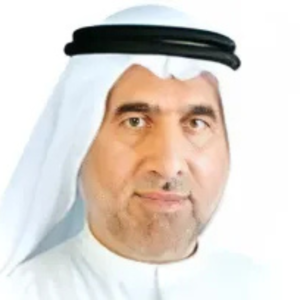
Sultan Bin Kayed Mohammed al-Qasimi is a member of the ruling family of the Ras al-Khaimah emirate and a leader of al-Islah, a political association in the UAE. He was arrested on April 20, 2012, as part of the “UAE94” for signing the petition calling for democratic reform in the UAE.
Arrested individuals were later sentenced in the UAE’s largest mass trial, known as the “UAE94”, before the Federal Supreme Court.
On January 27, 2013, the 94 defendants were charged with founding, organising and administering an organisation aimed at overthrowing the government, on the basis of article 180 of the penal code.
On July 2, 2013, the Emirati authorities convicted 61 of the 94 defendants, in addition to eight individuals in absentia. Al-Qasimi was sentenced to 10 years’ imprisonment.
In 2014, the UN Working Group on Arbitrary Detention issued Opinion 60/2013, in which it found that the detention of the 61 individuals convicted in the “UAE94” trial was arbitrary. Al-Qasimi was among them.
Al-Qasimi’s sentence ended in March 2022, but under the pretext of “rehabilitation needs”, pursuant to the UAE’s Counter-Terrorism Law and the Munasaha Centre Law, the authorities have extended his detention indefinitely.
In view of his continued detention, on August 18, 2022, together with the Emirates Detainees Advocacy Center (EDAC), MENA Rights Group requested the intervention of the Special Rapporteur on the situation of human rights defenders and the Special Rapporteur on counter-terrorism and human rights to urge Emirati authorities to release him unconditionally.
On September 7, 2022, MENA Rights Group and EDAC submitted al-Qasimi’s case to the UN Working Group on Arbitrary Detention (WGAD), asking them to issue an Opinion as to the arbitrary nature of his detention. In our Request for Opinion, we recalled that the UAE authorities kept al-Qasimi detained after the completion of his sentence on the basis of laws, namely the Counter-Terrorism Law and the Munasaha Centre Law that contain imprecise and ambiguous provisions that defy the principle of legal certainty. We also pointed out that his detention in a Munasaha Centre was not the result of a court decision that respected fair trial standards. Finally, we argued that, beyond his original sentence, his placement under the Munasaha regime is directly linked to the exercise of his rights and freedoms.
On March 30, 2023, the WGAD adopted an Opinion concerning 12 prisoners in the UAE94 case, including al-Qasimi, who are detained under the Munasaha regime. It recognised that their detention is arbitrary, since the 12 individuals were held “owing to their status as human rights defenders and on the basis of their political or other opinion in seeking to hold the authorities to account.”
In addition, the WGAD’s Opinion considered that their detention is not justified by a valid legal basis because the Counter Terrorism Law “creates significant risks of overbroad application and is thereby incompatible with article 11 (2) of the Universal Declaration of Human Rights.”
The WGAD has therefore recommended the government of the UAE to “release all the 12 individuals immediately and accord them an enforceable right to compensation and other reparations.”
On June 12, 2023, al-Qasimi made a final call to his family from within al-Razeen prison.
On September 12, 2023, MENA Rights Group requested the urgent intervention of the UN Working Group on Enforced or Involuntary Disappearances, calling on them to urge the Emirati authorities to take action to clarify al-Qasimi’s fate and whereabouts.
On December 1, 2023, al-Qasimi passed phone call to his family from the inside of an unknown facility belonging to the State Security Apparatus (SSA).
On December 7, 2023, a new mass trial began before the Abu Dhabi Federal Court of Appeal, involving 84 defendants. In the inaugural hearing, the charges against al-Qasimi and his co-defendants were read out Al-Qasimi and others are being charged with new terrorism crimes, namely, for establishing another clandestine organisation for the purpose of committing acts of violence and terrorism on UAE soil.
The second hearing took place on December 14, 2023, where three members of the SSA testified as witnesses for the Public Prosecution Office (PPO).
On December 19, 2023, MENA Rights Group and EDAC requested the urgent intervention of the Special Rapporteur on the promotion and protection of human rights and fundamental freedoms while countering terrorism.
The third hearing took place on December 21, 2023, and the entire trial was conducted secretly, with a notable absence of local media coverage.
On January 6, 2024, the Emirates News Agency (WAM) publicly announced that the UAE Attorney General had referred 84 defendants to the Abu Dhabi Federal Court of Appeal (State Security) in Case No. 87 of 2023, alleging the establishment and management of a clandestine organisation known as the “Justice and Dignity Committee.”
The proceedings continued in secrecy, with no meaningful public scrutiny and repeated concerns regarding due process and fair trial rights. On January 11, 2024, the fourth hearing reportedly took place with no media coverage, amid allegations of torture and ill-treatment reported by EDAC.
On May 10, 2024, WAM reported that the court set July 10, 2024 as the date to deliver its verdict, following a hearing in which defence submissions and pleadings were heard.
On July 10, 2024, the Abu Dhabi Federal Appeals Court (State Security) issued its verdict and sentenced dozens of defendants to lengthy prison terms. According to WAM, the court convicted 53 defendants, sentencing 43 to life imprisonment, and imposed additional prison terms and heavy fines in connection with allegations including the establishment of the “Justice and Dignity Committee” and related financing activities. Al-Qasimi was sentenced to life imprisonment.
On March 4, 2025, the State Security Chamber of the Federal Supreme Court rejected the appeal, formed by 53 defendants, thereby upholding the 43 life sentences, five sentences of 15 years and five sentences of 10 years.
On June 26, 2025, the Criminal Chamber of the Federal Supreme Court overturned the earlier judgment from July 10, 2024 and increased the number of life imprisonment sentences to 67. Accordingly, the final judgment provides 67 life sentences, five sentences of 15 years, five sentences of 10 years, one acquittal and the conviction of six institutions with their assets confiscated.
UN experts have repeatedly expressed serious concerns regarding the UAE84 case, including calls on Emirati authorities to refrain from prosecuting the defendants on grounds of incompatibility with international human rights standards. Following the imposition of life sentences, experts expressed dismay over the severity of the sentences handed down. Further alarm has since been raised over the prolonged arbitrary detention and alleged ill-treatment of individuals implicated in the case.