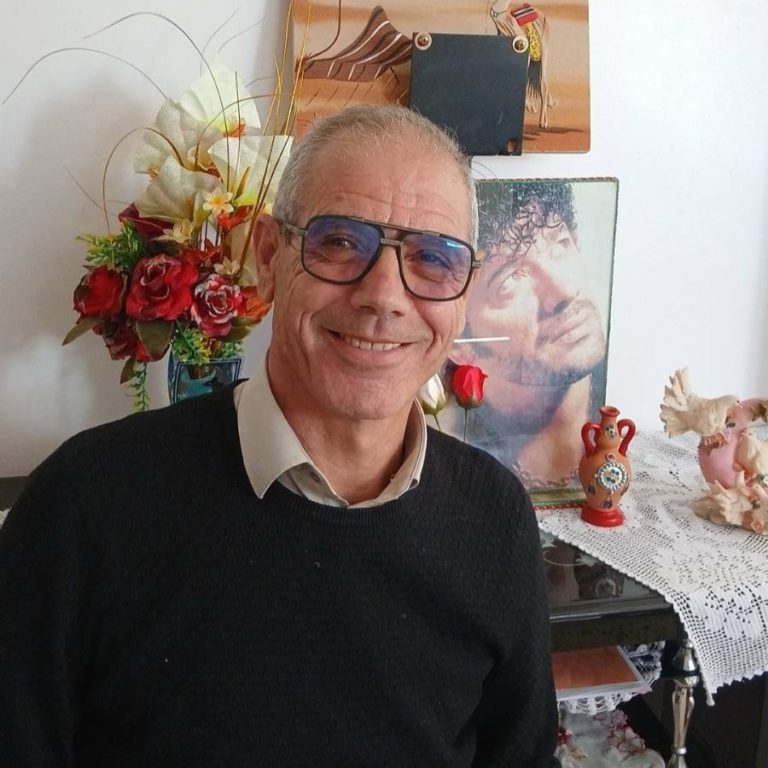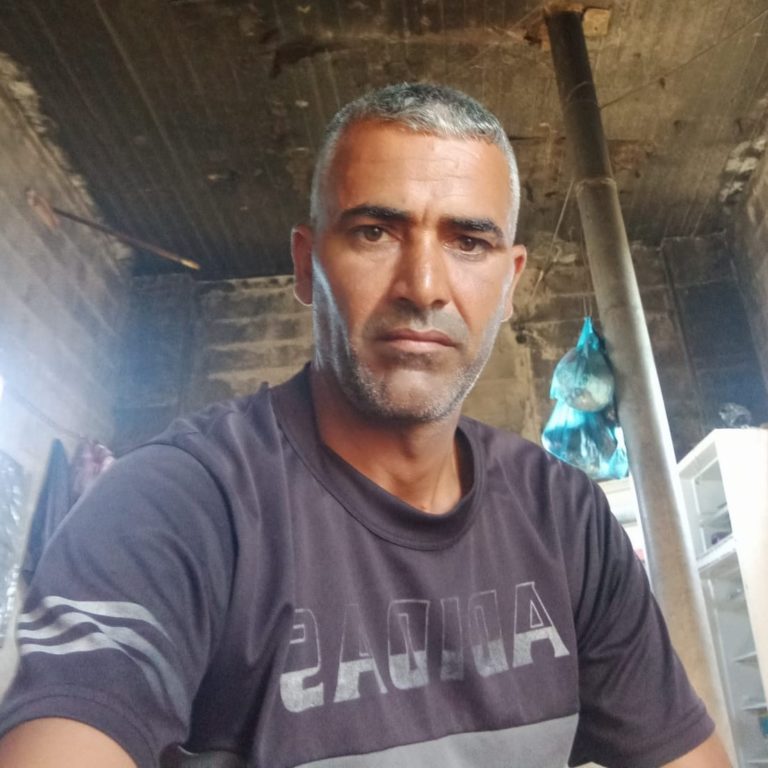
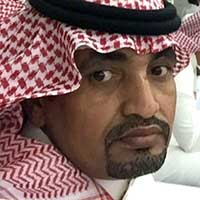
Human rights defender and anti-corruption activist Issa al-Nukheifi has been subjected to reprisals repeatedly by the Saudi authorities for his human rights activism and cooperation with international civil society and the United Nations. In late 2016, al-Nukheifi had been consulted during the preparation for the Special Rapporteur on Extreme Poverty’s visit to Saudi Arabia in January 2017, and he had agreed to meet and further assist the team on the ground.
On September 15, 2012, Al Nukheifi was arrested soon after appearing on television accusing the local authorities in Jazan, in the south-west of Saudi Arabia on the border with Yemen, of corruption and human rights violations during the forced eviction of nearly 12,000 residents of the region. On April 29, 2013, the Specialised Criminal Court (SCC) sentenced Al Nukheifi to three years in prison and a four-year travel ban based on provisions of the country’s Anti-Cybercrime Law. He was released on April 6, 2016.
Eight months later, on December 17, 2016, al-Nukheifi was summoned by the government’s Criminal Investigation Department (CID). Upon reporting to the police station the following day, he was arrested immediately.
Al-Nukheifi was questioned by the Bureau of Investigation and Prosecution (BIP) about his tweets calling for the release of members of the Saudi Civil and Political Rights Association and his contact with international human rights organisations. Al-Nukheifi was also interrogated about his new Twitter account, which called for democracy in Saudi Arabia and the establishment of a directly elected “Saudi Popular Parliament”.
On December 30, 2016, al-Nukheifi was transferred to Mecca General Prison, where he was forced to sleep on the floor without a blanket and repeatedly threatened with torture.
Al-Nukheifi’s trial commenced before the SCC on August 21, 2017. The charges brought against him included “seeking to destabilise the social fabric and national cohesion”; “communicating with and receiving money from foreign groups considered to be enemies of the state” and “using a personal cell phone and the internet to store and transfer information that is harmful to the public order” and “adopting a ‘Takfiri’ approach by accusing the Guardians of Saudi Arabia of being infidels”.
On February 28, 2018, the SCC sentenced al-Nukheifi to six years in prison and imposed a six-year travel and social media ban on him upon his release. On April 7, 2018, in a decision that cannot be further appealed, the Court of Appeal confirmed al-Nukheifi’s sentence.
On September 19, 2018, the UN Secretary-General raised the case in the 2018 report on reprisals against individuals who cooperate with the UN in the field of human rights.
In April 2019, al-Nukheifi requested to be transferred to Jizan prison in order to be closer to his 80-year-old mother, who struggles to visit him at Makkah General Prison, which is over 700 kilometres away from their usual residence. To date, his request has not been granted.
On May 1, 2019, MENA Rights Group referred the case to the UN Secretary-General ahead of the preparation of the annual report on intimidation and reprisals for cooperation with the UN in the field of human rights.
In July 2019, it was reported that al-Nukheifi was being subjected to on-going ill-treatment, including being stripped of his clothes and having his hands and feet shackled. In August, it emerged that he had been transferred to Riyadh for re-trial, without any further clarifications.
On September 19, 2019, the UN Secretary-General raised the case in the 2019 report on reprisals against individuals who cooperate with the UN in the field of human rights.
On November 21, 2019, after MENA Rights Group submitted a request for an opinion, the Working Group on Arbitrary Detention (WGAD) adopted Opinion 71/2019. In its Opinion, the WGAD stated that al-Nukheifi had been “the target of persecution” as a result of exercising his fundamental rights and asserted that “such sharing of information and ideas through online media cannot reasonably qualify as posing threats against morality, public order and the general welfare in a democratic society.” In light of this, the WGAD emphasised that alNukheifi was being detained arbitrarily and called on the authorities for his immediate release.
In addition, the WGAD noted that throughout its 28-year history, there have been about 60 cases where Saudi Arabia was found to have violated its international human rights obligations. The WGAD subsequently expressed its concern that “this indicates a systemic problem with arbitrary detention in Saudi Arabia, which amounts to a serious violation of international law,” warning that under certain circumstances, such violations may constitute crimes against humanity.
On May 1, 2020, MENA Rights Group referred the case to the UN Secretary-General ahead of the preparation of the annual report on intimidation and reprisals for cooperation with the UN in the field of human rights.
On September 30, 2020, the UN Secretary-General raised the case in the 2020 report on reprisals against individuals who cooperate with the UN in the field of human rights.
Between March 6 and 14 2021, al-Nukheifi and more than 30 other prisoners of conscience undertook a hunger strike in protest over harassment in al-Ha’ir prison in Riyadh. This included being held in the same ward as psychiatric detainees, some of whom have been violent towards them, and being denied family contact and access to books and newspapers. They ended the hunger strike after the authorities said they will meet the prisoner’s demands. On March 11, 2021, al-Nukheifi was transferred to a hospital after suffering from low blood sugar as a result of the hunger strike.
On April 15, 2021, MENA Rights Group referred the case to the UN Secretary-General ahead of the preparation of the annual report on intimidation and reprisals for cooperation with the UN in the field of human rights.
On September 29, 2021, the UN Secretary-General raised the case in the 2021 report on reprisals against individuals who cooperate with the UN in the field of human rights.
On April 15, 2022, MENA Rights Group referred the case to the UN Secretary-General ahead of the preparation of the annual report on intimidation and reprisals for cooperation with the UN in the field of human rights.
On September 29, 2022, the UN Secretary-General raised the case in the 2022 report on reprisals against individuals who cooperate with the UN in the field of human rights.
On October 15, 2022, al-Nukheifi completed his sentence and was due to be released.
On November 30, 2022, four UN Special Procedures mandate holders, including the Special Rapporteur on human rights defenders, expressed their concern for the physical and mental health and the integrity of al-Nukheifi. In particular, they have highlighted that there is an “emerging trend to keep human rights defenders in prison after having completed their sentence by overturning their original sentence and ordering new trials without providing them with sufficient information or legal assistance, in violation of the ‘non bis in idem’ principle”.
On January 30, 2023, the Saudi authorities responded to the previous UN communication, affirming that: “[w]ith regard to the case of citizens Issa al-Nukhaifi and Mohammad al-Qahtani, they were charged with committing a number of criminal offences within the prison and with inciting others to commit criminal offences at the end of their sentences. The Public Prosecution Service investigated the offences with which they were charged and issued a warrant for their arrest and for periods of detention based on the Code of Criminal Procedure. The case is still being investigated and they are both detained in the Riyadh Correctional Facility.”
On April 13, 2023, MENA Rights Group referred the case to the UN Secretary-General ahead of the preparation of the annual report on intimidation and reprisals for cooperation with the UN in the field of human rights.
On August 21, 2023, the UN Secretary-General raised the case in the 2023 report on reprisals against individuals who cooperate with the UN in the field of human rights.
On April 15, 2024, MENA Rights Group referred the case to the UN Secretary-General ahead of the preparation of the annual report on intimidation and reprisals for cooperation with the UN in the field of human rights.
On January 6, 2025, more than two years after the completion of his sentence, al-Nukheifi was released.
On April 25, 2025, MENA Rights Group referred the case to the UN Secretary-General ahead of the preparation of the annual report on intimidation and reprisals for cooperation with the UN in the field of human rights.
On September 24, 2025, the UN Secretary-General raised the case in the 2025 report on reprisals against individuals who cooperate with the UN in the field of human rights.