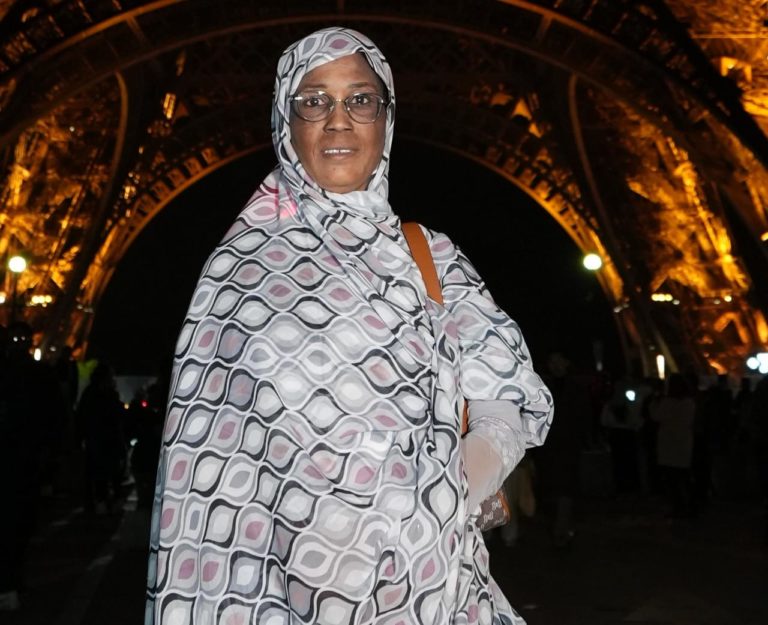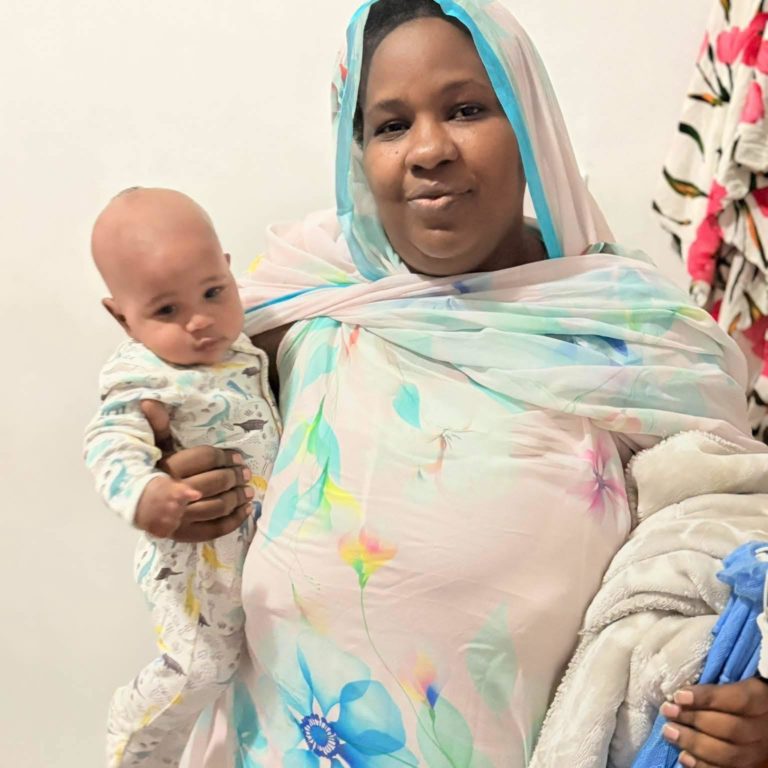

Maryam Al Balushi was arrested at her home on November 19, 2015, without a warrant, by officers from the State Security. She was subsequently disappeared and held at a secret detention centre where she was interrogated, subjected to beatings, humiliated and threatened with rape. Whilst under interrogation, Al Balushi was denied access to legal counsel and coerced into making self-incriminating confessions. In February 2016, Ms Al Balushi appeared before the State Security Prosecution, without the presence of legal counsel, and was formally charged under the Terrorism Law and the Cybercrime Law. The charges included “financing terrorism,” which related to a USD 600 donation she made to a Syrian family in 2014. After three months in secret detention, Al Balushi was provided with the opportunity to contact her family. On April 12, 2016, she was transferred to Al Wathba prison.
On October 24, 2016, Ms Al Balushi’s trial commenced before the Criminal Chamber of the Abu Dhabi Federal Appeal Court, during which her coerced confessions were admitted into evidence. On February 22, 2017, she was sentenced to five years in prison. The sentence was appealed but was upheld by the State Security Chamber of the Supreme Federal Court on June 5, 2017. Throughout the appeal process, the judge systematically dismissed her lawyer’s claims and questions. Prior to the final two hearings – including the sentencing hearing – prison administration denied Al Balushi contact with her family and with legal counsel, resulting in her lacking legal representation during the final two hearings.
Since being transferred to Al Wathba prison, Al Balushi has been held, at times, in solitary confinement and subjected to humiliating conditions, including surveillance cameras placed inside her bathroom. In addition, she has been subjected to abuse by other inmates. The prison authorities have failed to investigate these incidents and to ensure her safety and well-being.
Al Balushi has sent a series of voice recordings and letters in an effort to raise awareness of her suffering. These include voice recordings published on May 29, 2018, November 12, 2018, and November 29, 2019. On February 12, 2019, several UN mandate holders sent urgent appeal UA ARE 2/2019 to the Emirati authorities.
Al Balushi has been subjected to reprisals for endeavouring to raise public awareness of her case. Alongside Amina Al Abdouli, on July 30, 2019 she was brought before the Federal State Security prosecution and three new charges were brought against her, namely “leaking wrong information”, “affecting the reputation of the UAE and Al Wathba prison negatively”, and “causing problems between countries.” Neither woman has had access to legal counsel in relation to these charges.
On September 19, 2019, the UN Secretary-General raised the case in the 2019 report on reprisals against individuals who cooperate with the UN in the field of human rights.
At the beginning of February 2020, Al Abdouli and Al Balushi began to be placed in solitary confinement every Sunday, Monday and Thursday, in reprisal for refusing to provide the authorities with recorded self-incriminating confessions. On February 23, 2020, despite their poor health, both women began a hunger strike in protest against their solitary confinement and exposure to humiliating and degrading treatment. On March 8, 2020, Al Balushi attempted suicide in Al Wathba prison by cutting a vein in her hand and was subsequently taken to the prison clinic to have the wound bandaged.
Despite clear evidence that Al Balushi’s health has deteriorated severely throughout her imprisonment, prison authorities continue to deny her access to adequate medical care, raising grave concerns for her physical and mental well-being.
On May 1, 2020, MENA Rights Group referred the case to the UN Secretary-General ahead of the preparation of the annual report on intimidation and reprisals for cooperation with the UN in the field of human rights.
On September 30, 2020, the UN Secretary-General raised the case in the 2020 report on reprisals against individuals who cooperate with the UN in the field of human rights.
On January 18, 2021, after MENA Rights Group submitted a request for an opinion, the WGAD adopted Opinion No. 61/2020. Therein, the WGAD stated, inter alia, that Al Balushi’s detention lacked any legal basis as she was not afforded the right to challenge the legality both of her initial and her continuing confinement. Moreover, the Working Group reiterated that secret detention, which places the victim outside the protection of the law, is per se arbitrary. The Working Group also established that the vague and overly broad provisions, under which Al Balushi was sentenced, “made it impossible to invoke any legal basis to justify the original arrest, detention and conviction […] as well as the ongoing detention.” It also emphasized that Al Balushi’s sending of recordings to the UN Special Procedure mandate holders falls under the right to freedom of opinion and expression and thus qualified the new charges as “a clear reprisal for seeking the assistance of the international community”.
Last but not least, the Working Group deplored that Al Balushi’s case is one among many similar cases brought before it concerning arbitrary detention in the UAE and that these cases follow a familiar pattern, including “the use of secret detention; the use of forced confessions; prosecution under vaguely worded terrorism offences for peaceful exercise of human rights”, and that they indicate a systemic problem with arbitrary detention.
On April 15, 2021, MENA Rights Group referred the case to the UN Secretary-General ahead of the preparation of the annual report on intimidation and reprisals for cooperation with the UN in the field of human rights.
On April 28, 2021, she was sentenced to an additional three years in prison for “publishing information that disturbs the public order” (case No. 61/2021).
On September 29, 2021, the UN Secretary-General raised the case in the 2021 report on reprisals against individuals who cooperate with the UN in the field of human rights.
According to a direct source, she was transferred from Al Wathba prison in summer of 2020 alongside Amina Al Abdouli, but their current whereabouts are unknown.