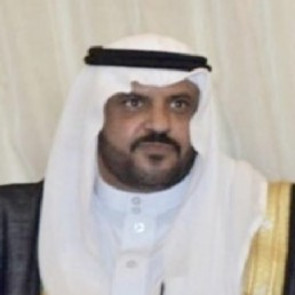
On April 3, 2013, along with a group of other Saudi activists, Al Otaibi participated in the creation of a new human rights association, the Union for Human Rights. Shortly after, the Public Prosecution launched a criminal investigation against its founding members. Al Otaibi, together with other activists, was summoned for “co-founding an illegal association”. In the interrogations that followed, they were denied the right to a legal counsel.
On May 4, 2013, the Union for Human Rights was officially forced to halt its activities. The requests for registration, made in May 2013 and once again in November 2015, were rejected.
Al Otaibi was once again summoned for questioning by the Public Prosecution office in March 2014, and required to sign a pledge to stop participating in interviews broadcasted on TV and issuing reports and statements. He was then placed under surveillance without notification by the Public Prosecution, which also included his social media accounts.
On October 30, 2016, Al Otaibi was summoned by the SCC and charged, partially based on the Saudi Anti-Cybercrime Law, with “illegally founding an association”, “spreading chaos and stirring up public opinion against the State”, “harming the reputation of the Kingdom before the international community and human rights bodies”, “preparing, signing and publishing statements on the Internet that are harmful to the reputation of the Kingdom and of its judicial and security institutions, with the intention of dividing national unity, and damaging the reputation of the State and its security and stability” and with publishing “hostile and abusive posts insulting the Kingdom and the religious authority and aimed at disrupting the social order” on a Twitter account.
On March 30, 2017, in order to avoid being prosecuted for his human rights activism, Al Otaibi fled to Qatar, where he obtained refugee status. He was supposed to be resettled in Norway as part of a UN protection programme.
On May 24, 2017, Al Otaibi was arrested at Doha International Airport on his way to Oslo. On May 28, 2017, he was then deported to Saudi Arabia. Upon his arrival, he was arrested by officers of the General Directorate of Investigation (Al Mabahith) and transferred to the Al Mabahith prison in Dammam. He was subsequently held incommunicado for two weeks and was placed in solitary confinement for three months.
On July 12, 2017, Al Otaibi was brought before the SCC, which resumed the proceedings against him. Until that date, Al Otaibi was denied access to a lawyer.
On January 25, 2018, the SCC deliberated on Al Otaibi’s case in a closed hearing and sentenced him on the aforementioned charges to 14 years in prison. Al Otaibi appealed the decision on February 22, 2018, but it was later upheld.
On November 20, 2018, the UN Working Group on Arbitrary Detention adopted Opinion 68/2018, in which it qualified Al Otaibi’s detention as arbitrary and called for his immediate release.
On July 25, 2019, Al Otaibi was brought back to court in a new trial, on the charges of “fleeing justice”, “going to Qatar”, “communicating with foreign entities” and “interfering in public affairs”. On December 1, 2020, he was sentenced to one more year in prison.
From January 11, 2021, until January 31, 2021, Al Otaibi went on a hunger strike asking to be moved to a prison in Jeddah, to be closer to his family. He moreover requested proper medical care. While the authorities promised to meet his demands, he remains detained at Al Mabahith prison in Dammam.
In April 2021, the SCC increased the additional one-year sentence handed down in December 2020 to a three-year sentence on appeal, resulting in a 17-year prison term in total.
On April 14, 2021, MENA Rights Group and ALQST for Human Rights sent an urgent appeal to the UN Special Rapporteur on the situation of human rights defenders, asking her to call on the Saudi authorities to immediately and unconditionally release Al Otaibi and other detained activists.