
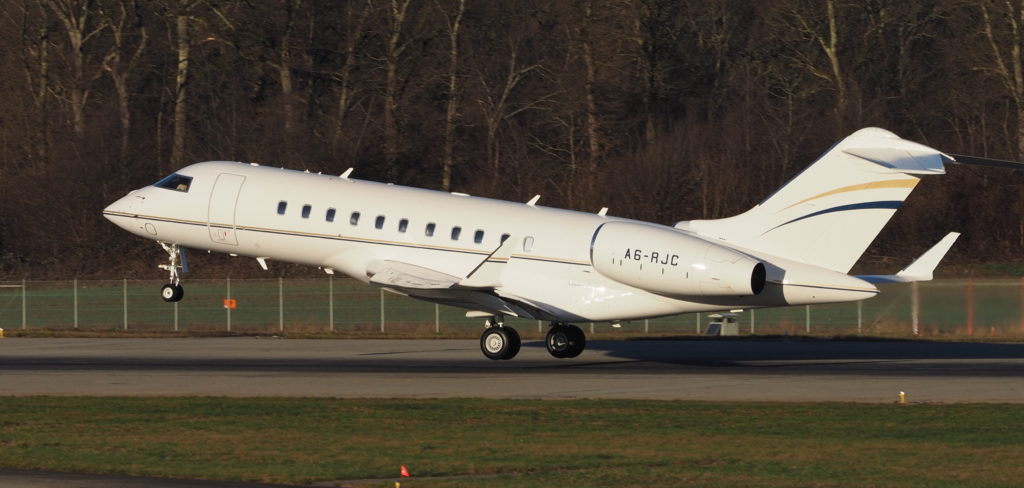
On January 24, 2022, Serbian authorities extradited Bahraini dissident Ahmed Jaafar Mohamed Ali back to Bahrain, where he faces torture. The extradition, which was in violation of the European Court of Human Rights’ request for interim measures, was carried out by UAE-based charter operator, RoyalJet. On January 31, 2022, over 10 human rights NGOs wrote to the CEO of RoyalJet, Rob Dicastri, requesting that the company clarify its involvement in Ali’s wrongful extradition.
RoyalJet Operations Office
Next to Presidential Flight
Al Diyafah St.
Airport Area – Abu Dhabi
United Arab Emirates
Re: RoyalJet’s involvement in the extradition of dissident Ahmed Jaafar Mohamed Ali to Bahrain, where he faces torture
January 31, 2022
Dear Mr Rob Dicastri,
We, the undersigned human rights organisations, are writing to express our utmost concern regarding your company’s recent involvement in the wrongful extradition of Bahraini dissident Ahmed Jaafar Mohamed Ali from Serbia to Bahrain.
On Monday January 24, 2022, RoyalJet airplane A6-RJC was used to fly Mr Ali out of Belgrade, Serbia, to Manama, Bahrain (flight number ROJ023), where he was handed over to the Bahraini authorities.
The extradition was carried out in violation of an injunction of the European Court of Human Rights (ECHR), issued three days prior, on January 21, 2022. The latter called for halting Mr Ali’s extradition until after February 25, by which the Serbian authorities were asked to provide the ECHR with further information on Mr Ali’s case, including the foreseable conditions of detention in Bahrain and the risk of torture that Mr Ali might face if extradited. As maintained by the ECHR, failure to comply with the court’s interim measures may amount to a violation of European Convention on Human Rights’s article 3, which prohibits torture and degrading treatment or punishment.
Mr Ali is a Bahraini dissident who made clear his intention to apply for asylum in Serbia on multiple occasions since his arrest in November 2021, due to the risk of torture and death he would face if returned to his homecountry. Indeed, Mr Ali was subjected to severe acts of torture by Bahraini Special Security Forces in 2007. He was sentenced, in absentia, to two life sentences in 2013 and 2015. In the 2015 case, following a grossly unfair trial, three of his co-defendants were tortured and then executed, in 2017, by the Bahraini authorities, despite an urgent appeal sent to the government of Bahrain urging it to spare their lives.
We fear that by using your company’s aircrafts to carry out Mr Ali’s wrongful extradition, you may have played an active role in violating the ECHR’s interim measures and article 3 of the UN Convention against Torture, which enshrines the principle of non-refoulement. You have also violated the UN Guiding Principles on Business and Human Rights, under which business enterprises’ responsibility to respect human rights requires that they seek “to prevent or mitigate adverse human rights impacts that are directly linked to their operations, products or services by their business relationships, even if they have not contributed to those impacts.”
As such, we kindly request that you clarify the steps taken by RoyalJet in order to prevent or mitigate your involvement in human rights violations, in particular:
- Whether your company was aware of the decision of the European Court of Human Rights calling on Serbia to halt the extradition of Mr Ali to Bahrain;
- Whether procedures were undertaken by your company considering your aircraft members could not have possibly been unaware that Mr Ali was traveling against his will;
- What your company’s current policy is regarding its potential involvement in processes of wrongful extraditions;
- What steps you intend to take to ensure your aircrafts are not being used to carry out refoulement in the future;
- Provide information about the treatment of Ahmed Jaafar Mohamed Ali during the flight.
We thank you for your consideration and look forward to your response.
Signatories:
ALQST for Human Rights, Americans for Democracy & Human Rights in Bahrain (ADHRB), Association for Victims of Torture-UAE, Bahrain Institute for Rights and Democracy (BIRD), Center for Democracy and Human Rights in Saudi Arabia (CDHR), CODEPINK, Democracy for the Arab World Now (DAWN), Detained International, European Center for Democracy and Human Rights (ECDHR), Freedom Forward, MENA Rights Group.




.jpg)